

 (843) 343-4542
 gerry@mda-recon.com
 Gerald C. McDevitt
Low Delta-V Collisions and Disputed Injury Claims: What the Physics Actually Show
Low-speed impacts produce less vehicle damage but can still generate significant occupant forces — forensic reconstruction can distinguish…
When a collision occurs at an overseas military installation, host nation documentation, foreign road standards, and SOFA jurisdiction issues create investigative challenges that require an expert willing and equipped to deploy internationally.
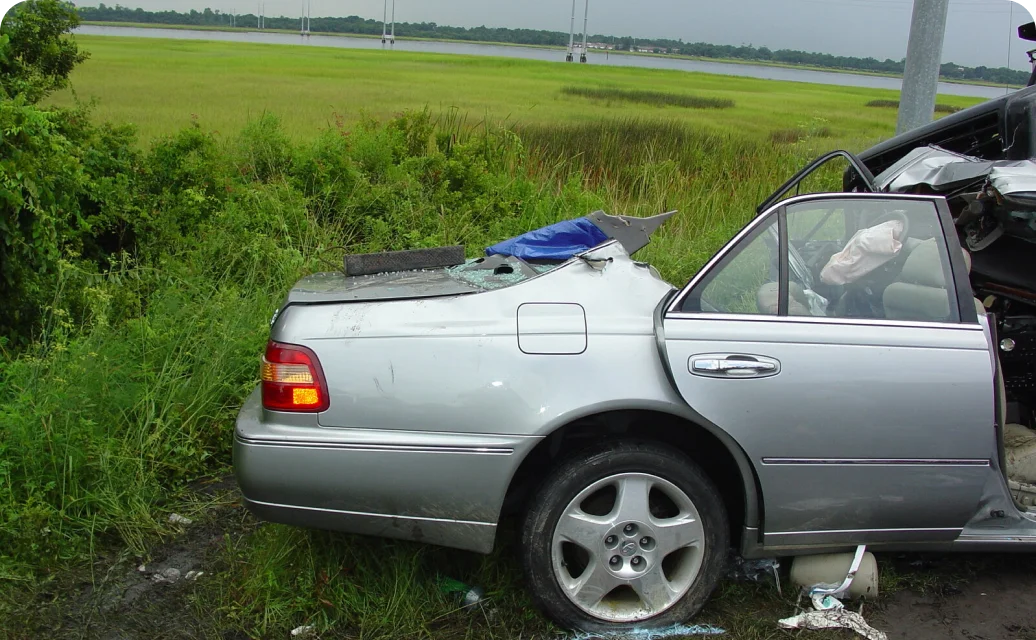
When a vehicle collision involving a service member occurs at an overseas military installation — or on a foreign roadway near one — the investigative and forensic challenges multiply. The collision itself may be no different from one that occurs stateside, but the environment surrounding it — foreign law enforcement procedures, host nation documentation standards, language barriers, unfamiliar road design, and the jurisdictional complexities of Status of Forces Agreements — creates a unique set of problems for the JAG attorney tasked with prosecuting or defending the case.
OCONUS cases involving vehicular manslaughter, negligent homicide, or DUI fatalities under the UCMJ require the same quality of forensic reconstruction as domestic cases. But getting that level of analysis at an overseas installation demands an expert who is willing to travel internationally, who can work with foreign evidence, and who understands the logistical realities of deploying forensic technology across borders.
When a serious vehicle collision involving a service member occurs overseas, the initial investigation is often conducted by host nation law enforcement — German Polizei, Japanese police, Korean authorities — sometimes in coordination with military police, CID, NCIS, or OSI, and sometimes not. The quality and thoroughness of that investigation varies enormously depending on the country, the jurisdiction, and the resources of the responding agency.
Host nation collision reports may be written in the local language, use different measurement systems, follow different investigative protocols, and document the scene to a standard that may or may not meet the evidentiary requirements of a U.S. military court-martial. Critical evidence — tire marks, vehicle positions, debris fields, and roadway geometry — may be documented differently or not at all. Scene preservation timelines differ. Vehicle impound procedures vary. In some jurisdictions, the involved vehicles may be released or repaired before anyone on the U.S. side realizes the forensic significance of what has been lost.
Relying solely on a host nation investigation for a court-martial is a risk. The foreign investigator might not testify in your military proceeding. Their report may not meet Military Rule of Evidence (MRE) 702 admissibility standards. Their methodology may not be documented in a way that can withstand cross-examination. And their conclusions may be based on investigative standards that differ from what U.S. courts expect.
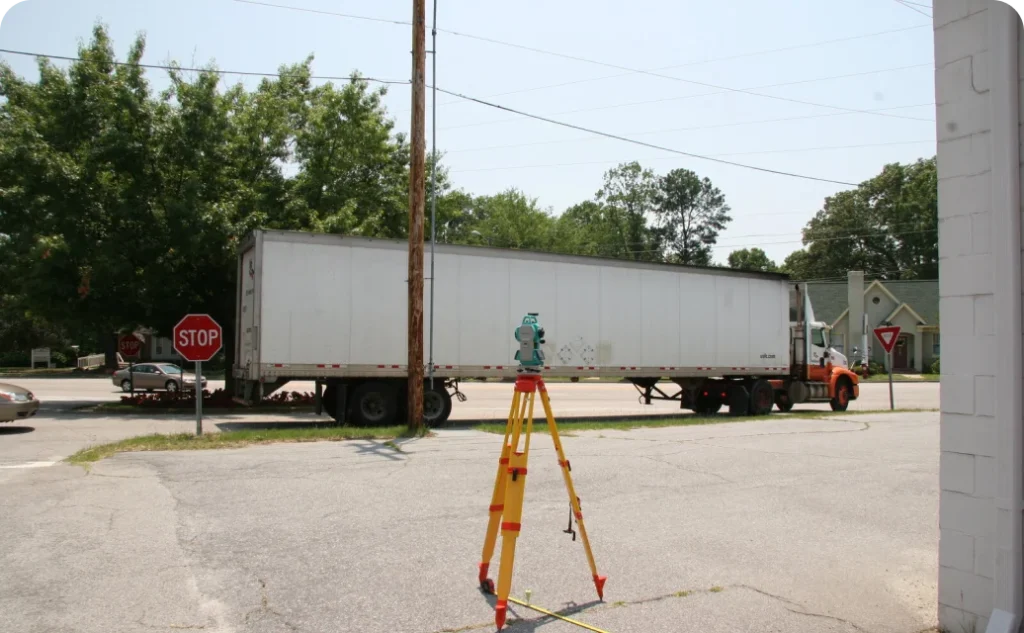
Deploying an independent forensic reconstruction expert to the scene — even weeks or months after the collision — allows for independent scene documentation using precision technology. LiDAR scanners, GNSS positioning systems, and Total Station survey equipment can capture the roadway geometry, grades, sight lines, and physical evidence that remain at the scene long after the vehicles have been removed. An experienced reconstructionist knows what to look for and what to measure, even when visiting a scene well after the incident.
When the scene visit is combined with a review of the host nation report, photographs, vehicle inspection data, and any available Event Data Recorder information, the expert can produce an independent reconstruction that meets the admissibility standards of U.S. military courts.
The jurisdictional framework for OCONUS cases is governed by the Status of Forces Agreement between the United States and the host nation. SOFA provisions determine whether the case is prosecuted under UCMJ or host nation law, and they affect everything from evidence collection to witness availability. JAG attorneys handling OCONUS cases must navigate these provisions carefully, and having a forensic expert who has worked in the SOFA environment before — who understands the practical realities of obtaining evidence across jurisdictional lines — is a significant advantage.
A legitimate concern for attorneys considering an OCONUS expert deployment is whether the necessary forensic equipment can actually get there. Modern forensic technology is designed to be portable. GNSS satellite receivers, Total Station survey instruments, and Bosch CDR tools for Event Data Recorder extraction are all transportable as checked or carry-on luggage on commercial flights. LiDAR scanners require careful transport but are routinely shipped internationally for forensic and survey work.
The key is working with an expert who has done this before — who understands international shipping logistics for sensitive equipment, who carries the necessary documentation for customs clearance, and who has the operational experience to deploy to an unfamiliar location and produce the same quality of forensic work product as they would at a domestic scene.
The types of cases that arise at overseas installations mirror those stateside but with added complexity. A service member involved in a fatal collision on the Autobahn near Ramstein faces vehicular manslaughter charges under Article 119, but the scene was documented by German police using metric measurements and German investigative protocols. A Marine stationed in Okinawa is charged with negligent homicide after a collision on a narrow Japanese roadway with unfamiliar traffic patterns. A soldier at Camp Humphreys in South Korea is involved in a multi-vehicle collision where the Korean police report conflicts with witness statements from military personnel.
In each of these scenarios, the JAG attorney needs a forensic expert who can bridge the gap between the host nation investigation and the evidentiary requirements of a U.S. military court-martial. That expert must be able to interpret foreign documentation, conduct independent analysis, and present findings in a format that meets MRE 702 standards.
OCONUS cases do not have to be disadvantaged cases. With the right forensic expert — one who has international deployment experience, portable precision equipment, and an understanding of both the UCMJ and the practical realities of working in a foreign jurisdiction — the same quality of forensic reconstruction that is available domestically can be delivered to any military installation worldwide. The service member’s right to a thorough defense, and the government’s obligation to present accurate evidence, do not stop at the U.S. border.
Air Force veteran. Qualified in U.S. military courts. Retainer waived for all UCMJ cases.
Gerald C. McDevitt
Low-speed impacts produce less vehicle damage but can still generate significant occupant forces — forensic reconstruction can distinguish…
 Gerald C. McDevitt
Proving that impairment caused a fatal collision — not just that the driver was impaired — requires a…
 Gerald C. McDevitt
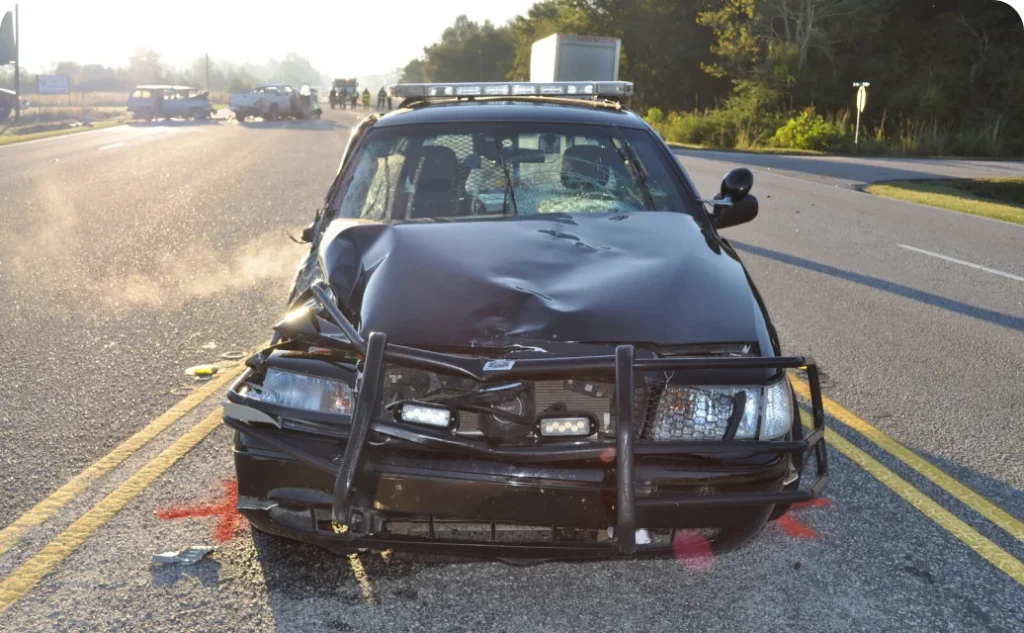
A vehicle cannot leave a scene without leaving evidence — paint transfer, glass, tire impressions, and debris patterns…
 Gerald C. McDevitt
Tractor-trailer and fleet vehicle collisions involve federal regulatory requirements, electronic logging devices, and complex vehicle dynamics that demand…