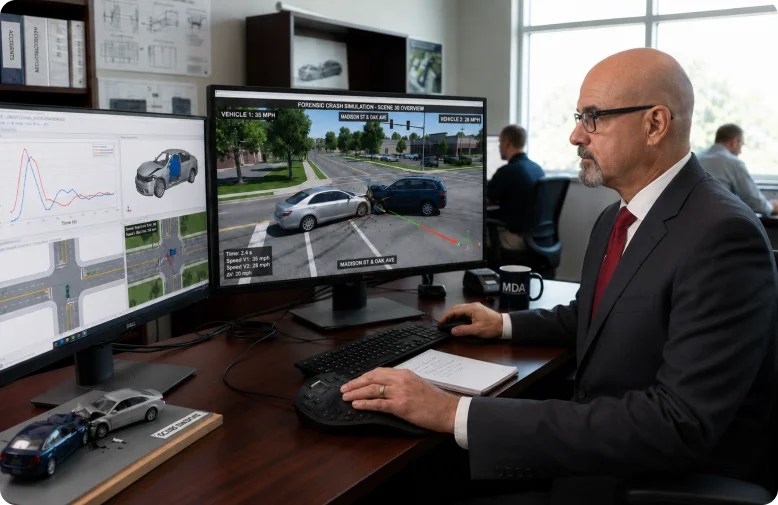
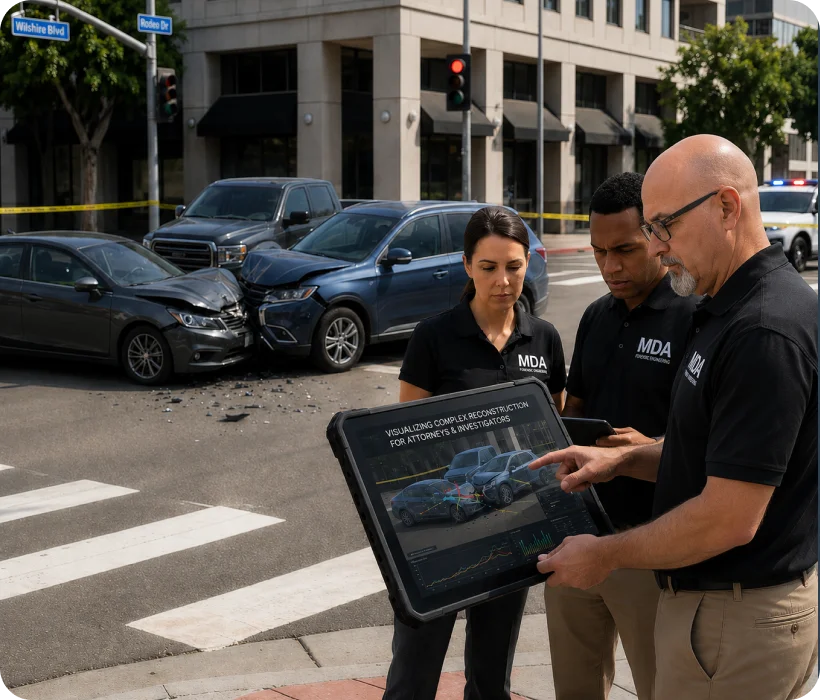
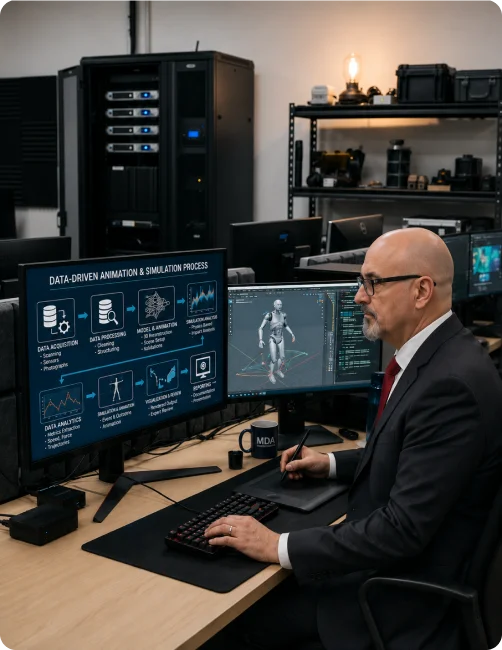
Gerald McDevitt develops forensic 3D animations and crash simulations based on measured data, physical evidence, and scientifically accepted reconstruction methodologies. These visualizations are designed to accurately represent vehicle movement, impact dynamics, and sequence of events.
Each animation is grounded in the same data used in reconstruction analysis, ensuring that visual outputs are accurate, consistent, and suitable for legal proceedings.
Technical reconstruction findings can be difficult to interpret through written reports alone. Gerald McDevitt translates complex data into clear visual representations that illustrate how a collision occurred. These animations demonstrate vehicle paths, timing, and impact conditions in a way that supports case strategy and improves understanding for attorneys, judges, and juries. All visuals are developed with accuracy and defensibility in mind, ensuring consistency with the underlying data and analysis.
Visual representation of the collision sequence based on measured data and reconstruction analysis, including vehicle paths, impact locations, and final rest positions.
Simulation of vehicle dynamics under specific impact conditions, used to test reconstruction conclusions against measured data and to demonstrate alternative scenarios proposed by opposing experts.
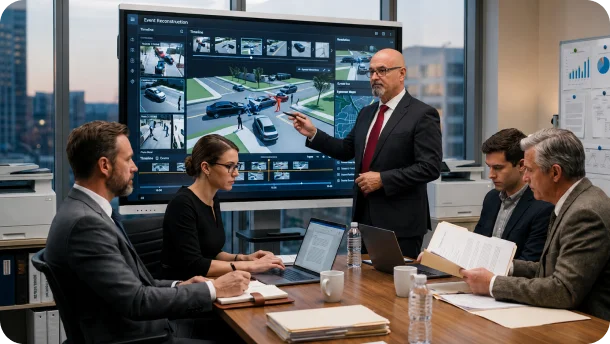
Animations developed specifically for trial presentation, designed to clearly support expert testimony and assist in explaining complex findings to judges and juries.
Step-by-step visual breakdown of the collision sequence, showing timing, movement, and key events leading up to and following impact.
Animations that combine scene mapping, vehicle data, and reconstruction findings into a unified visual presentation aligned with all available evidence.
Every animation is based on documented reconstruction analysis rather than visual approximation. Parameters such as speed, distance, timing, and motion are derived from measured data and validated methodologies.
This ensures that visualizations are not only effective for presentation but also defensible under cross-examination and aligned with evidentiary standards required in legal proceedings.
All animations are developed using reconstruction data derived from scene measurements, mapping, and vehicle analysis. Data sources may include Emlid RS3 GNSS, Total Station surveying, Recon3D LiDAR-based documentation, Autel EVO II Pro RTK V3 drone photogrammetry, and high-resolution digital imaging.

Each animation is built to reflect measurable conditions and is verified against physical evidence to ensure accuracy and consistency.
All animations are developed as demonstrative exhibits to support expert testimony. Visual outputs are structured to clearly illustrate findings without overstating conclusions, maintaining alignment with the underlying data.
Gerald McDevitt presents these visualizations in a clear and structured manner, ensuring they enhance understanding while maintaining scientific integrity.
Discuss case details directly to determine whether animation or simulation will assist in presenting reconstruction findings effectively.