

 (843) 343-4542
 gerry@mda-recon.com
 Gerald C. McDevitt
Low Delta-V Collisions and Disputed Injury Claims: What the Physics Actually Show
Low-speed impacts produce less vehicle damage but can still generate significant occupant forces — forensic reconstruction can distinguish…
Before an expert's opinions reach the jury, they have to survive a legal admissibility challenge — understanding what courts look for can help you choose the right expert from the start.
Before a forensic accident reconstruction expert ever presents an opinion to a judge or jury, there is a threshold question that can determine the trajectory of the entire case: will the expert’s testimony be admitted? The standards governing expert admissibility — Daubert in federal courts and most state courts, Frye in a minority of states — are the gatekeeping mechanisms that determine whether an expert’s opinions will be heard or excluded. For attorneys retaining or opposing a reconstruction expert, understanding these standards is essential.
The Daubert standard, established by the U.S. Supreme Court in Daubert v. Merrell Dow Pharmaceuticals (1993) and codified in Federal Rule of Evidence 702, applies in all federal courts and has been adopted by the majority of state courts. Under Daubert, the trial judge serves as a gatekeeper who must determine that the expert’s testimony is both relevant and reliable before it is presented to the jury.
The reliability inquiry considers several factors, commonly referred to as the Daubert factors: whether the theory or technique can be and has been tested, whether it has been subjected to peer review and publication, the known or potential rate of error, the existence and maintenance of standards controlling the technique’s operation, and whether the methodology is generally accepted within the relevant scientific community.
For accident reconstruction, these factors translate into practical questions. Has the reconstructionist used validated physics-based methods (conservation of momentum, energy analysis, kinematics)? Are those methods published in peer-reviewed literature and taught at recognized training programs? Can the expert articulate the error rates associated with their calculations? Does the expert follow documented standards and protocols? Are the methods generally accepted within the forensic reconstruction community?
An expert whose methodology checks all of these boxes presents testimony that is difficult to exclude under Daubert. An expert whose methodology is undocumented, untested, or based on novel theories unsupported by the scientific community is vulnerable to a motion to exclude.
The Frye standard, from Frye v. United States (1923), predates Daubert and takes a simpler approach: the expert’s methodology must be “generally accepted” within the relevant scientific community. Frye does not require the multi-factor analysis of Daubert. The question is simply whether the techniques used by the expert are recognized and accepted by other practitioners in the field.
A handful of states, including New York, California, Pennsylvania, Illinois, and Florida, still follow Frye. In practice, the difference between Daubert and Frye is less significant for accident reconstruction than it is for more novel or emerging scientific disciplines. The core methods of collision reconstruction — momentum analysis, crush energy calculations, EDR interpretation, scene documentation — are well-established and generally accepted under both standards.
Whether the challenge comes under Daubert or Frye, the characteristics that make a reconstruction expert’s testimony admissible are fundamentally the same.
Methodology over conclusions. Courts evaluate how the expert reached their opinion, not whether the opinion favors one side. An expert who uses documented, validated, peer-reviewed methods and applies them correctly to the evidence will survive a challenge regardless of what the conclusions are.
Technology and documentation. An expert who documents scenes with GNSS positioning, RTK-equipped drones, and Total Station equipment, extracts EDR data with certified tools, and produces measurable, verifiable work product demonstrates a level of rigor that is inherently difficult to challenge. These technologies have documented accuracy specifications and published error rates — exactly what Daubert requires.
Human factors analysis grounded in published research. When an expert opines on driver perception and reaction time, that analysis must be based on established, peer-reviewed human factors research — published studies on perception-reaction time distributions, visibility and conspicuity testing, and driver detection capabilities under specific conditions. An opinion about whether a driver could have seen and reacted to a hazard is admissible when it is grounded in this body of scientific literature and applied to the measurable conditions documented at the scene. It becomes vulnerable to exclusion when it is based on the expert’s unsupported personal judgment rather than published data.
Experience and track record. An expert with decades of experience, hundreds of fatal collision reconstructions, and a history of qualification in multiple courts brings a track record that speaks directly to reliability. Courts regularly consider the expert’s training, certifications, and prior testimony when evaluating qualifications.
Intellectual honesty. The expert who acknowledges the limitations of their analysis, clearly defines what can and cannot be determined from the available evidence, and does not overreach is more credible — and more difficult to exclude — than one who claims certainty where the evidence does not support it. Courts and juries recognize the difference between a scientist following the evidence and an advocate dressed in an expert’s credentials.
Understanding admissibility standards is equally important when challenging the opposing party’s reconstruction expert. The most effective challenges focus on methodology rather than credentials. Did the opposing expert use validated methods? Did they apply those methods correctly to the specific evidence in this case? Did they account for all relevant variables? Is their analysis reproducible by another qualified expert using the same data?
Common vulnerabilities in reconstruction testimony include reliance on assumptions that are not supported by the physical evidence, use of outdated methods when more precise technology was available and applicable, failure to consider alternative scenarios consistent with the evidence, human factors opinions that are not grounded in published perception-reaction research, and mathematical or logical errors in the analysis. A qualified reconstruction expert retained by the opposing side can identify these vulnerabilities through a peer-level review of the opposing expert’s report and methodology.
When evaluating a potential reconstruction expert, ask about their methodology before you ask about their conclusions. Request a list of cases in which they have been qualified as an expert and any cases in which their testimony was challenged. Ask whether they have been excluded under Daubert or Frye, and if so, why. Review their CV for relevant training, certifications, and professional affiliations. And evaluate whether they use current technology — GNSS positioning, drone mapping, EDR extraction, Total Station surveying, 3D scanning — because these tools not only produce better analysis, they also demonstrate the methodological rigor that survives admissibility challenges.
The admissibility of expert testimony is not a formality. It is the threshold that determines whether the most critical evidence in your case will be heard. Whether you are retaining an expert to support your case or challenging the opposing expert’s qualifications, the analysis begins with methodology. An expert whose work is grounded in validated science, documented with precision technology, and presented with intellectual honesty will meet the admissibility standards of any court — Daubert, Frye, or the Military Rules of Evidence. The right expert does not just survive the challenge. They make the challenge look unwarranted.
32+ years of experience. Hundreds of fatal collision reconstructions. Qualified in state, federal, and military courts.
Gerald C. McDevitt
Low-speed impacts produce less vehicle damage but can still generate significant occupant forces — forensic reconstruction can distinguish…
 Gerald C. McDevitt
Proving that impairment caused a fatal collision — not just that the driver was impaired — requires a…
 Gerald C. McDevitt
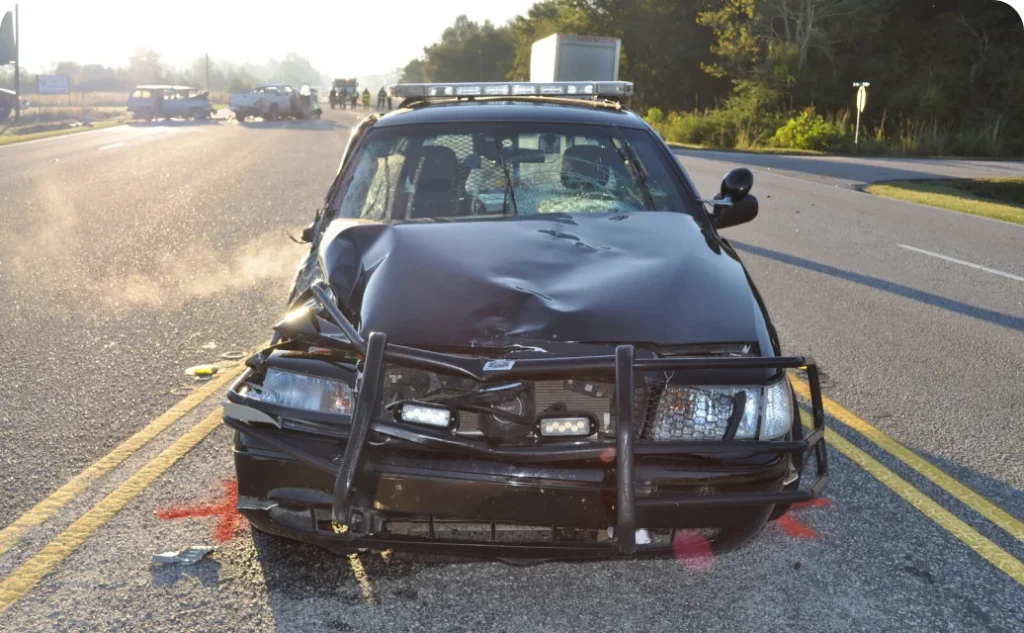
A vehicle cannot leave a scene without leaving evidence — paint transfer, glass, tire impressions, and debris patterns…
 Gerald C. McDevitt
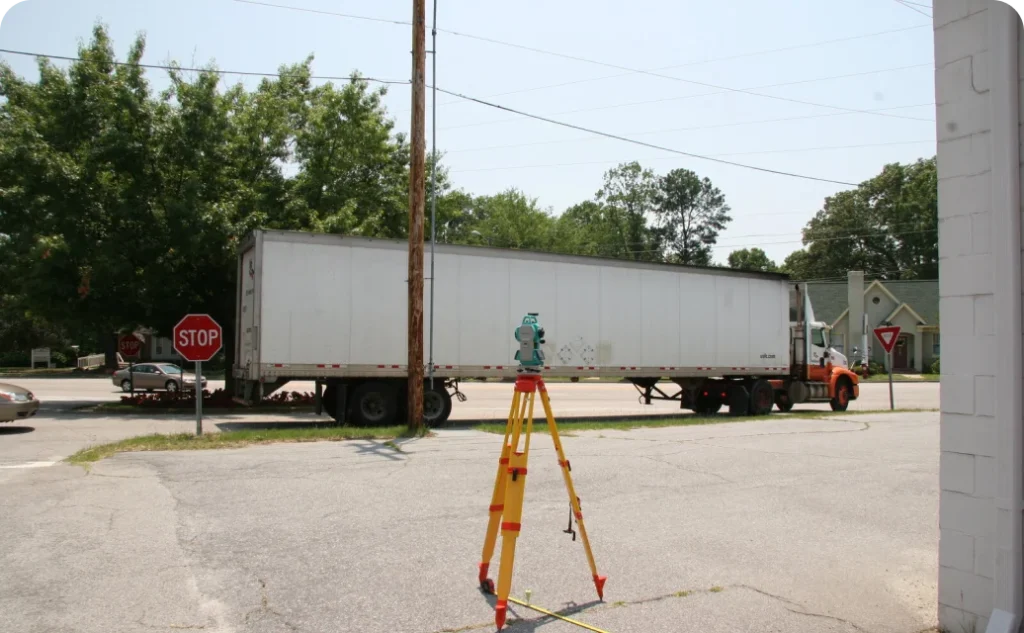
Tractor-trailer and fleet vehicle collisions involve federal regulatory requirements, electronic logging devices, and complex vehicle dynamics that demand…