

 (843) 343-4542
 gerry@mda-recon.com
 Gerald C. McDevitt
Low Delta-V Collisions and Disputed Injury Claims: What the Physics Actually Show
Low-speed impacts produce less vehicle damage but can still generate significant occupant forces — forensic reconstruction can distinguish…
UCMJ vehicular manslaughter and DUI fatality cases require the same rigorous forensic reconstruction used in civilian courts — with additional considerations unique to the military justice system.
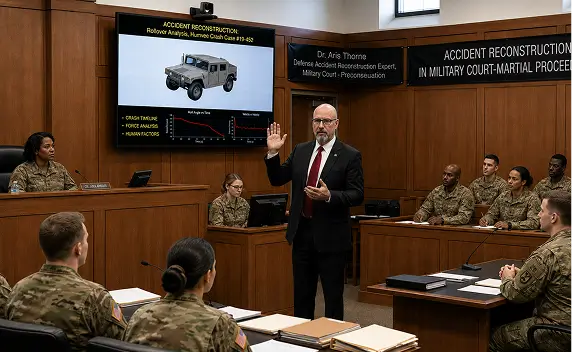
Military court-martial proceedings involving vehicle collisions present unique challenges that differ significantly from their civilian counterparts. Whether the charge is vehicular manslaughter under UCMJ Article 119, negligent homicide under Article 134, or a felony-level DUI resulting in death or serious bodily injury, the underlying forensic questions are the same: What happened, why did it happen, and can it be proven to the standard required for conviction or acquittal?
For JAG attorneys — both trial counsel and defense counsel — understanding when and how to engage a forensic accident reconstruction expert can be the difference between a case built on assumptions and one built on science.
Not every collision case requires a reconstruction expert. A single-vehicle DUI where the driver admits to drinking and the facts are undisputed may not need forensic analysis. But when the facts are contested — when speed, driver behavior, visibility, mechanical failure, or the sequence of events is in question — a qualified reconstructionist provides the scientific foundation that lay witness testimony alone cannot.
Military cases that commonly require reconstruction expertise include vehicular manslaughter (Article 119) involving disputed speeds or causation, fatal DUI collisions where the role of impairment versus other factors is contested, vehicle-pedestrian incidents on or near military installations, multi-vehicle collisions involving military personnel or government vehicles, and any case where the prosecution or defense needs to establish or challenge the physical evidence of what occurred.
A forensic accident reconstructionist applies the principles of physics, mathematics, and engineering science to physical evidence — tire marks, crush damage, roadway geometry, vehicle rest positions, and electronic data — to determine the dynamics of a collision. This is not guesswork. It is a scientific process grounded in validated methodologies including conservation of momentum, energy analysis, and kinematics.
Modern reconstruction relies heavily on technology. LiDAR scanners and Total Station survey equipment capture the scene with millimeter-level precision. GNSS satellite positioning systems document locations to centimeter accuracy. Event Data Recorders (the vehicle’s “black box”) provide pre-crash data including speed, braking, throttle position, and seatbelt status in the seconds before impact. Photogrammetry and 3D animation transform raw data into courtroom demonstratives that a panel of military officers can understand.
The end product is an expert opinion, expressed to a reasonable degree of scientific and engineering certainty, regarding how the collision occurred and what caused it.
Expert testimony in military courts is governed by Military Rule of Evidence (MRE) 702, which incorporates the Daubert standard. The military judge must determine that the expert’s testimony is based on sufficient facts or data, is the product of reliable principles and methods, and that the expert has reliably applied those principles to the facts of the case.
For accident reconstruction, this means the expert must demonstrate that the methodologies used — momentum analysis, crush energy calculations, EDR interpretation, scene documentation — are scientifically accepted and have been properly applied to the specific evidence in the case. An expert with extensive experience, documented methodology, and a track record of qualification in military and civilian courts significantly reduces the risk of an admissibility challenge.
One of the most critical — and most misunderstood — capabilities of a qualified reconstruction expert is the analysis of human factors as they relate to driver perception and response. This is where reconstruction goes beyond the physics of the collision itself and addresses whether the conditions allowed a driver to perceive a hazard and respond in time to avoid it.
A reconstruction expert trained in human factors analysis can evaluate the visibility and conspicuity of a hazard under the conditions that existed at the time of the collision — lighting, weather, roadway geometry, obstructions, and the position and movement of the threat relative to the driver’s line of sight. The expert can then calculate the time and distance that were available for the driver to perceive the hazard, recognize it as a threat, decide on an evasive action, and execute that action. This is known as perception-reaction time analysis, and it is grounded in decades of published scientific research on how drivers detect and respond to hazards under varying conditions.
Using established human factors data, the expert can determine whether the available time and distance were sufficient for a given percentile of the driving population to perceive and react to the threat. For example, the expert might determine that a hazard became visible at a distance of 300 feet, that the driver’s vehicle was closing at 60 miles per hour, and that the total available time from the point of possible detection to the point of impact was 3.4 seconds. The expert can then compare that available time against published perception-reaction time values for the general driving population and opine on whether a reasonably attentive driver would have had sufficient time to detect the hazard and take effective evasive action.
This analysis is powerful because it translates the physical evidence — speeds, distances, sight lines — into a human context that directly addresses questions of negligence and culpability. It gives the military judge or panel a scientifically grounded basis for evaluating whether the driver’s failure to react was reasonable or unreasonable under the circumstances.
Intellectual honesty is a hallmark of credible forensic work. While a reconstruction expert can determine speeds, distances, timing, the physical sequence of events, and whether the conditions allowed a reasonable driver to perceive and react to a hazard, there are boundaries the expert does not cross. The expert cannot determine the intent or conscious decision-making of a specific individual, nor what the driver subjectively perceived at any given moment. Those are questions of fact for the military judge or panel to decide. The expert provides the physical and scientific framework — the measurable reality of what was visible, what time was available, and what a given percentile of drivers could have done under those conditions — and the trier of fact applies that framework to the specific driver in the case. JAG attorneys should be cautious of any expert who claims to answer questions that go beyond the physical evidence and established scientific research.
For trial counsel, retaining a reconstruction expert follows a straightforward procurement process. The government identifies the need, locates a qualified expert, and engages them through standard contracting channels. An expert registered in the System for Award Management (SAM.gov) with an active CAGE code simplifies this process significantly.
For defense counsel, the process involves requesting expert assistance through the convening authority under RCM 703. The defense must satisfy the three-prong test established in United States v. Gonzalez (1994): demonstrate why the expert is needed, what the expert can accomplish for the accused, and why defense counsel cannot develop the evidence themselves. It is important to note that the Gonzalez standard for obtaining expert assistance is distinct from the MRE 702 standard for expert testimony — approval of an expert assistant under Gonzalez does not automatically mean the expert will be permitted to testify at trial. A qualified reconstruction expert can assist defense counsel in framing the initial request by providing a case assessment that identifies the forensic questions at issue and the methodology required to answer them.
Military proceedings have their own rhythm, terminology, and procedural requirements. JAG attorneys benefit from working with a reconstruction expert who understands military culture, rank structure, and the weight that a court-martial conviction carries for a service member’s career, benefits, and future. An expert with military service background and prior military court experience requires no learning curve — they can step into an Article 32 hearing or a court-martial and operate effectively from day one.
The initial consultation is confidential and protected under the attorney-client privilege and work product doctrine per RCM 701(f). There is no charge for an initial case evaluation, and for UCMJ cases, the standard retainer fee is waived, eliminating a common barrier when requesting government-funded expert assistance.
A court-martial involving a fatal or serious-injury vehicle collision is not the place for assumptions, estimates, or unqualified opinions about what happened. The physical evidence tells a story, but it takes a qualified forensic expert to read it accurately and present it in a form that meets the admissibility standards of military courts. Whether you are prosecuting or defending, the right expert strengthens your case by grounding it in science rather than speculation.
Air Force veteran. Qualified in U.S. military courts. Retainer waived for all UCMJ cases.
Gerald C. McDevitt
Low-speed impacts produce less vehicle damage but can still generate significant occupant forces — forensic reconstruction can distinguish…
 Gerald C. McDevitt
Proving that impairment caused a fatal collision — not just that the driver was impaired — requires a…
 Gerald C. McDevitt
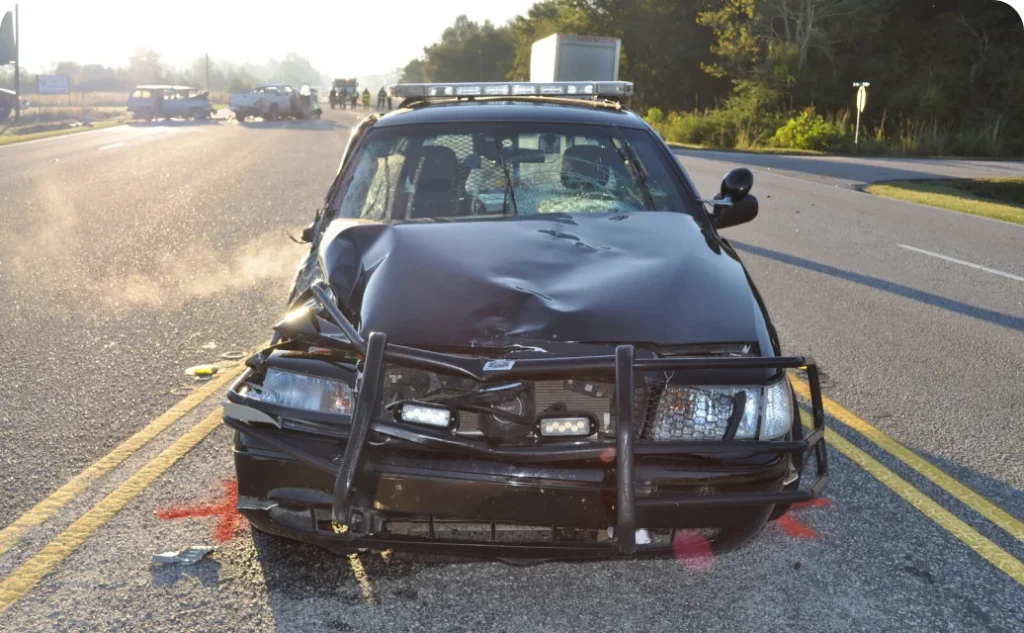
A vehicle cannot leave a scene without leaving evidence — paint transfer, glass, tire impressions, and debris patterns…
 Gerald C. McDevitt
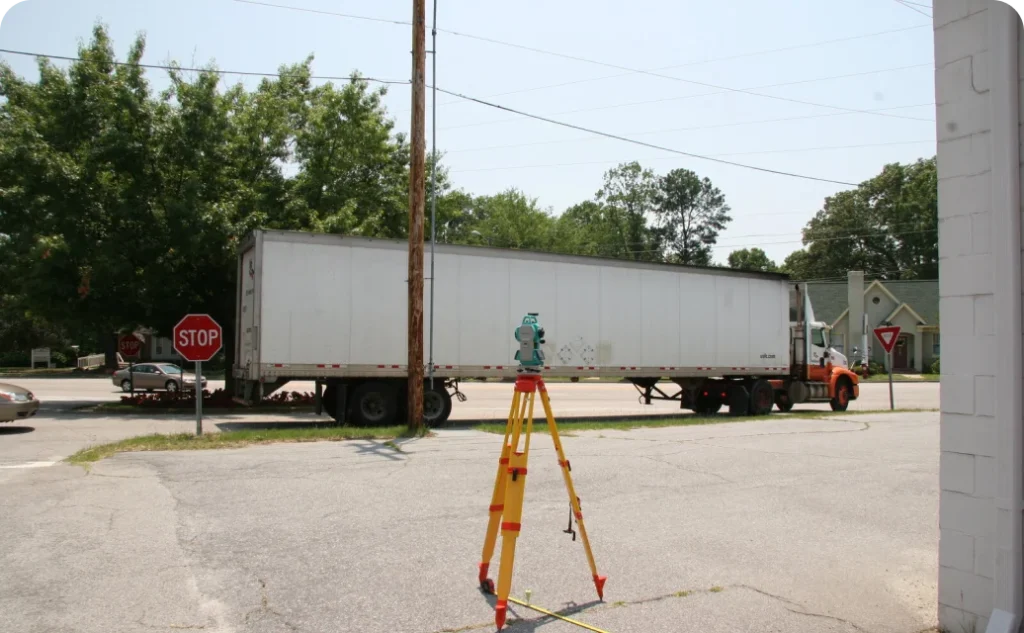
Tractor-trailer and fleet vehicle collisions involve federal regulatory requirements, electronic logging devices, and complex vehicle dynamics that demand…