

 (843) 343-4542
 gerry@mda-recon.com
 Gerald C. McDevitt
Low Delta-V Collisions and Disputed Injury Claims: What the Physics Actually Show
Low-speed impacts produce less vehicle damage but can still generate significant occupant forces — forensic reconstruction can distinguish…
Military defense counsel have a due process right to expert assistance — this article walks through exactly how to frame an expert request that satisfies the convening authority's three-prong test.
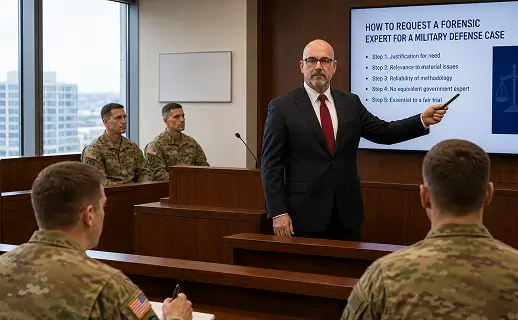
If you are a military defense counsel representing a service member charged with vehicular manslaughter, negligent homicide, or a DUI-related fatality under the UCMJ, you may need a forensic accident reconstruction expert to adequately defend the case. The physical evidence — vehicle speeds, brake application, driver reaction time, crash dynamics — requires scientific analysis that falls outside the training and capability of a defense attorney, no matter how experienced.
The good news is that military law provides a clear mechanism for obtaining expert assistance at government expense. The challenge is knowing how to frame the request so it gets approved. This article walks through the process.
As a matter of military due process, service members are entitled to expert assistance when it is necessary for an adequate defense. This right exists regardless of indigency — unlike the civilian system, where expert funding may depend on the defendant’s financial resources. In military proceedings, the government funds expert witnesses for both prosecution and defense when the need is established.
The legal foundation for this right is found in UCMJ Article 46 (equal opportunity to obtain witnesses and evidence), RCM 703(d) (employment of expert witnesses), and the confidentiality protections of RCM 701(f) (attorney-client privilege and work product doctrine covering expert consultants).
In United States v. Gonzalez (1994), the Court of Military Appeals established the standard that defense counsel must meet to demonstrate the necessity for expert assistance. The test has three prongs, and all three must be addressed in the request to the convening authority:
First: Why is the expert needed? The defense must articulate the specific forensic questions that require expert analysis. In a vehicular manslaughter case, this might include determining vehicle speeds at the time of collision, analyzing whether the driver had adequate time to perceive and react to a hazard based on established human factors research, evaluating whether mechanical failure contributed to the crash, interpreting Event Data Recorder information, or reconstructing the physical sequence of events to test the government’s theory of the case.
Second: What can the expert accomplish for the accused? The defense must explain what the expert will do and how it will assist the defense. For a reconstruction expert, this typically includes independent scene documentation and analysis, review and interpretation of physical evidence and EDR data, perception-reaction time analysis using published human factors research, identification of alternative causation factors that the government may not have considered, preparation of an expert report and courtroom demonstratives, and testimony at the Article 32 hearing, court-martial, or sentencing phase.
Third: Why can’t defense counsel do this themselves? This prong requires the defense to explain why the specialized knowledge of a forensic expert is needed — why the attorney alone cannot develop the evidence. For accident reconstruction, this is straightforward: the application of physics, mathematics, and scientific principles to collision evidence, the operation of LiDAR scanners and survey equipment, the extraction and interpretation of EDR data, the analysis of human factors and perception-reaction time data, and the production of scientifically defensible opinions require specialized training, equipment, and experience that defense counsel does not possess.
A well-framed request to the convening authority is specific, not generic. It identifies the forensic questions at issue in the particular case, explains the methodology the expert will employ, and connects the expert’s potential findings to the elements of the charged offense or to a specific defense theory.
A weak request says: “The defense requests a forensic expert to assist with the case.” A strong request says: “The defense requests a forensic accident reconstruction expert to conduct an independent analysis of the collision dynamics, including vehicle speed determination through crush energy analysis and EDR data interpretation, and to perform a perception-reaction time analysis using established human factors data to evaluate whether the accused had adequate time to detect the hazard and take evasive action — a factual determination that directly addresses the element of culpable negligence under Article 119.”
The difference is specificity. The convening authority — and, if necessary, the military judge — needs to understand exactly what the expert will do and why it matters to the case.
If the convening authority denies the request for expert assistance, the defense may raise the issue with the military judge. The judge will evaluate the request under the same Gonzalez framework and determine whether the denial results in a fundamentally unfair trial. If the judge orders the government to provide expert assistance, the government must comply, although it may provide a reasonable substitute rather than the specific expert requested.
To preserve the issue for appeal, defense counsel should make a clear record of the request, the denial, and the motion to the military judge. A well-documented request that satisfies all three Gonzalez prongs is significantly harder for the convening authority to deny and creates a strong appellate record if it is denied.
Here is a practical point that many defense counsel — especially those in their first or second defense rotation — may not realize: you do not have to write the expert request in a vacuum. A qualified forensic reconstruction expert can review the basic case materials (collision report, photographs, charge sheet) and provide an initial case assessment that identifies the forensic questions at issue, outlines the methodology required, and explains what the expert analysis could accomplish for the defense.
This initial assessment gives defense counsel the specific, technical language needed to satisfy all three Gonzalez prongs. It transforms a generic request into a detailed, scientifically grounded justification that the convening authority is far more likely to approve.
Many reconstruction experts provide this initial case assessment at no charge, understanding that the formal engagement and funding will follow once the convening authority approves the request. The goal is to get the expert approved — and a detailed, well-framed request is the most effective way to make that happen.
The right to expert assistance in military proceedings is established law. The mechanism for obtaining that assistance — the Gonzalez test and RCM 703 — is clear. What makes the difference between a request that gets approved and one that gets denied is specificity, preparation, and a clear connection between what the expert will do and why it matters to the case. A qualified forensic reconstruction expert can help defense counsel build that request from the initial case assessment forward, ensuring that the service member’s right to an adequate defense includes the scientific expertise the case demands.
Air Force veteran. Qualified in U.S. military courts. Retainer waived for all UCMJ cases.
Gerald C. McDevitt
Low-speed impacts produce less vehicle damage but can still generate significant occupant forces — forensic reconstruction can distinguish…
 Gerald C. McDevitt
Proving that impairment caused a fatal collision — not just that the driver was impaired — requires a…
 Gerald C. McDevitt
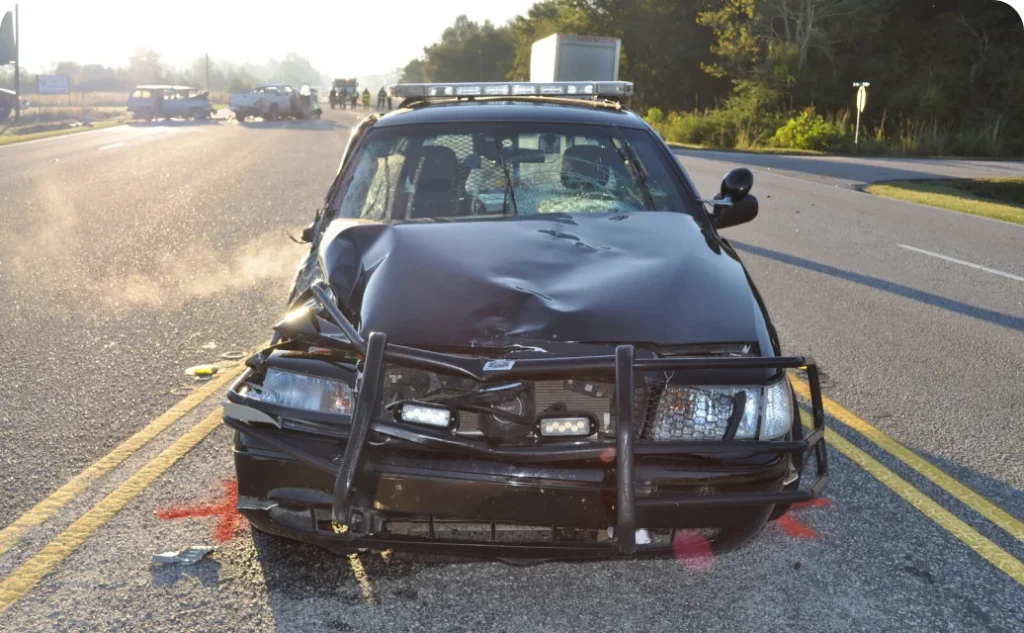
A vehicle cannot leave a scene without leaving evidence — paint transfer, glass, tire impressions, and debris patterns…
 Gerald C. McDevitt
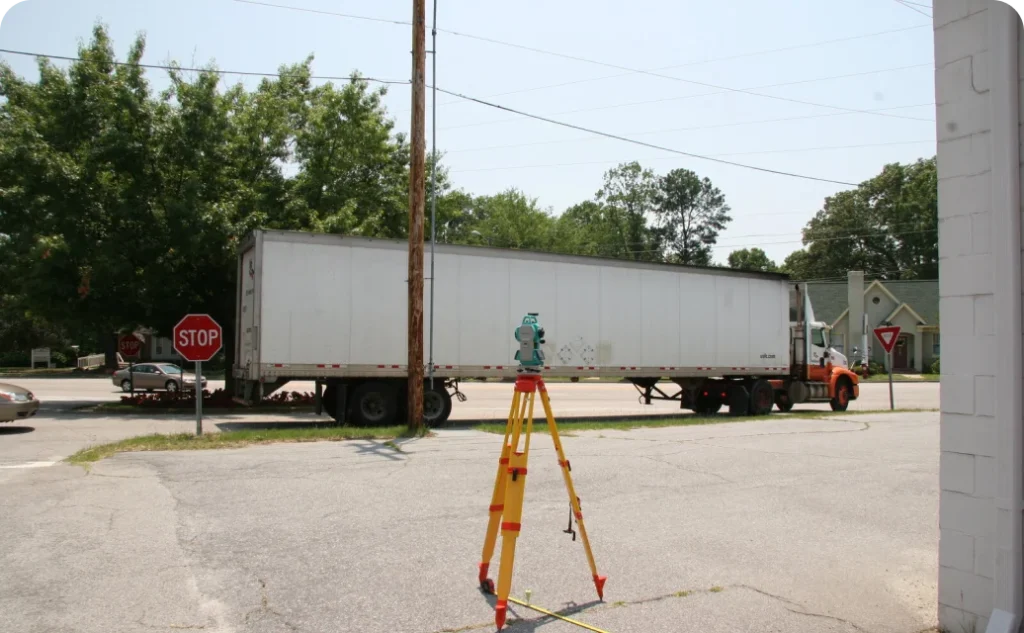
Tractor-trailer and fleet vehicle collisions involve federal regulatory requirements, electronic logging devices, and complex vehicle dynamics that demand…