


 (843) 343-4542
 gerry@mda-recon.com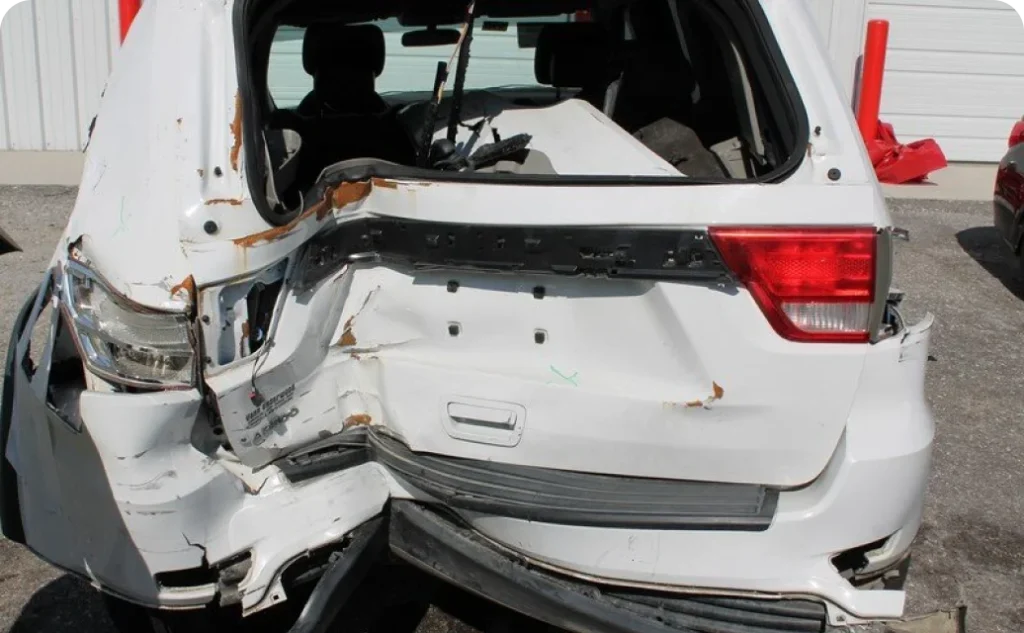
 Gerald C. McDevitt
Low Delta-V Collisions and Disputed Injury Claims: What the Physics Actually Show
Low-speed impacts produce less vehicle damage but can still generate significant occupant forces — forensic reconstruction can distinguish…
Most modern vehicles record speed, braking, throttle input, and seatbelt status in the seconds before a crash — here is what that data can prove in court and why timing matters.
If you are an attorney or insurance adjuster handling a vehicle collision case where speed, braking, or driver behavior is disputed, there may be a source of evidence sitting inside the vehicle that can resolve the dispute with scientific precision — and it may have a limited shelf life.
The Event Data Recorder, commonly called the vehicle’s “black box,” is an electronic module built into most modern vehicles that captures critical data in the seconds surrounding a crash event. When properly extracted and interpreted by a certified forensic expert, EDR data can confirm or contradict witness testimony, validate or challenge police estimates, and provide a factual foundation for determining what actually happened in the moments that matter most.
An Event Data Recorder is a component of the vehicle’s airbag control module (ACM) or powertrain control module. It is not a standalone device installed after the fact — it is built into the vehicle at the factory. Federal regulation (49 CFR Part 563) has required standardized EDR data collection in all light vehicles manufactured after September 1, 2012, though many vehicles manufactured well before that date also contain EDRs.
The EDR continuously monitors vehicle systems during normal operation. When it detects a crash event — defined by a threshold level of deceleration — it permanently records a snapshot of vehicle data from the seconds immediately before and during the impact. This data is stored in non-volatile memory, meaning it survives the crash and remains on the module until it is either extracted or the module is physically destroyed.
The specific parameters recorded vary by vehicle manufacturer and model year, but the data typically includes vehicle speed at one-second intervals for the five seconds preceding the crash, whether the brake pedal was applied and when, throttle position and engine RPM, steering wheel angle, seatbelt status for the driver and front passenger, delta-V — the change in velocity during impact, which is a direct measurement of crash severity, airbag deployment timing and sequence, and stability control and ABS activation.
Some newer vehicles equipped with advanced driver assistance systems also record forward collision warning activation, automatic emergency braking engagement, lane departure events, and adaptive cruise control status. As vehicle technology evolves, the data captured by EDRs continues to expand.
Each data point is recorded with a precise timestamp, creating a second-by-second (and in some cases, fraction-of-a-second) picture of what the vehicle was doing in the moments leading up to and during the collision. This is not reconstructed data. It is not estimated. It is recorded directly by the vehicle’s own electronic systems.
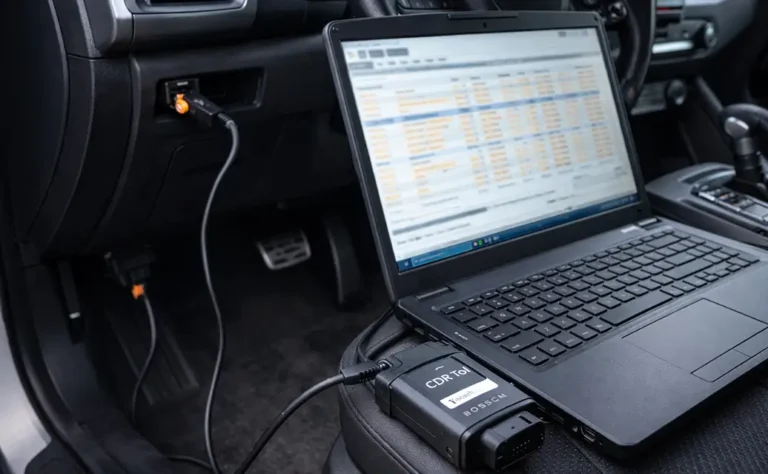
EDR data is extracted from the vehicle using a specialized tool called the Bosch Crash Data Retrieval (CDR) system. The CDR tool connects directly to the vehicle’s diagnostic port or, if the vehicle is too heavily damaged for a direct connection, to the airbag control module itself after it has been physically removed from the vehicle.
The extraction process takes only minutes and produces a standardized report showing all recorded data in a format that can be analyzed and presented in court. However, the extraction must be performed by a trained and certified operator. Improper handling of the module or incorrect connection procedures can compromise the data. Chain of custody must be maintained from the moment the vehicle is secured through the extraction and analysis process.
EDR data serves as objective, electronic evidence that is independent of human memory, perception, or bias. In litigation, it is used in several critical ways.
Speed determination. When the central question is how fast a vehicle was traveling before the collision, EDR data provides a recorded answer. This eliminates the uncertainty of witness estimates and the limitations of tire mark-based speed calculations, particularly on roadways where no marks were left.
Driver behavior analysis. Did the driver brake before the collision? If so, when? Was the driver accelerating? Was the seatbelt fastened? These questions, which often form the core of liability and negligence arguments, are answered directly by the data.
Crash severity quantification. Delta-V — the change in velocity during impact — is a direct measurement of how severe the collision actually was. This is critical in cases where the relationship between the crash forces and the claimed injuries is disputed.
Validation or contradiction of other evidence. EDR data can be compared against witness testimony, police estimates, and other forensic calculations to validate or challenge their accuracy. When an EDR shows the vehicle was traveling 45 mph and a witness claims it was going 80, the data resolves the conflict.
EDR data is only valuable if it still exists when you need it. The most common way EDR evidence is lost is through delay. If the vehicle is repaired, the airbag control module may be replaced and the original data permanently erased. If the vehicle is totaled and sent to salvage, the module may be removed or the vehicle crushed. If the vehicle is returned to the owner and they sell or trade it, the data leaves with the vehicle.
For attorneys, the message is clear: if your case involves a vehicle collision and any question of speed, braking, or driver behavior exists, the first step is to determine where the involved vehicles are and whether the EDR data has been preserved. If the vehicle is still accessible, arrange for a certified extraction as soon as possible. If the vehicle has already been repaired, salvaged, or sold, the data may be gone permanently.
Spoliation letters demanding preservation of the vehicle and its electronic data should be issued early in the case. Courts have imposed sanctions for failure to preserve EDR data when a party knew or should have known the evidence was relevant.
Event Data Recorder evidence is one of the most powerful tools available in vehicle collision litigation. It is objective, it is precise, and it is recorded by the vehicle itself — not reconstructed after the fact by a human analyst. But it is also perishable. The window to extract it can close without warning. If your case involves a disputed collision, the question is not whether to pursue EDR data — it is whether you can afford not to.
32+ years of experience. Hundreds of fatal collision reconstructions. Qualified in state, federal, and military courts.
Gerald C. McDevitt
Low-speed impacts produce less vehicle damage but can still generate significant occupant forces — forensic reconstruction can distinguish…
 Gerald C. McDevitt
Proving that impairment caused a fatal collision — not just that the driver was impaired — requires a…
 Gerald C. McDevitt
A vehicle cannot leave a scene without leaving evidence — paint transfer, glass, tire impressions, and debris patterns…
 Gerald C. McDevitt
Tractor-trailer and fleet vehicle collisions involve federal regulatory requirements, electronic logging devices, and complex vehicle dynamics that demand…