


 (843) 343-4542
 gerry@mda-recon.com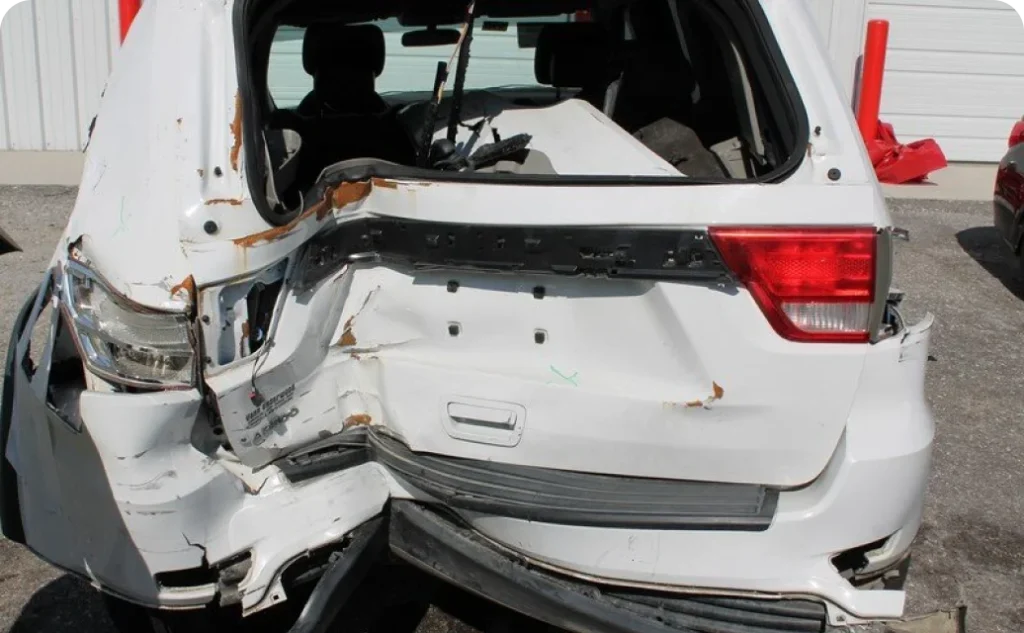
 Gerald C. McDevitt
Low Delta-V Collisions and Disputed Injury Claims: What the Physics Actually Show
Low-speed impacts produce less vehicle damage but can still generate significant occupant forces — forensic reconstruction can distinguish…
Tractor-trailer and fleet vehicle collisions involve federal regulatory requirements, electronic logging devices, and complex vehicle dynamics that demand a reconstructionist with specific heavy-vehicle expertise.
Commercial vehicle collisions operate in a regulatory, evidentiary, and financial environment that distinguishes them from every other category of traffic case. The reconstruction analyst must work with federal regulations enforced by the Federal Motor Carrier Safety Administration, multiple independent digital data sources with different retention characteristics, vehicle dynamics that bear little resemblance to passenger car behavior, and mechanical systems — particularly air brakes — whose state of adjustment at the moment of collision can determine causation. Add to this the reality that a fully loaded tractor-trailer may weigh eighty thousand pounds or more, roughly twenty times the mass of a typical passenger vehicle, and the complexity becomes clear.
Commercial vehicle collisions operate in a regulatory, evidentiary, and financial environment that distinguishes them from every other category of traffic case. The reconstruction analyst must work with federal regulations enforced by the Federal Motor Carrier Safety Administration, multiple independent digital data sources with different retention characteristics, vehicle dynamics that bear little resemblance to passenger car behavior, and mechanical systems — particularly air brakes — whose state of adjustment at the moment of collision can determine causation. Add to this the reality that a fully loaded tractor-trailer may weigh eighty thousand pounds or more, roughly twenty times the mass of a typical passenger vehicle, and the complexity becomes clear.
Gerald McDevitt reconstructs commercial motor vehicle incidents across the full range of case types — tractor-trailers, straight trucks, delivery vehicles, fleet sedans, and commercial passenger vehicles. The methodology addresses not only what happened in the seconds surrounding the collision, but the mechanical, digital, and operational context that shaped it.
The differences between commercial vehicle and passenger car dynamics extend far beyond mass. Heavy vehicles present entirely distinct behavior in acceleration, deceleration, lateral motion, rotational motion, roll, pitch, and handling characteristics — and each of these has direct implications for reconstruction.
Articulation is a defining characteristic. A tractor-trailer is not a single rigid vehicle but two connected units that move in relationship to each other through a fifth-wheel coupling. This articulation produces collision failure modes unknown to passenger vehicles: jackknifing, in which the tractor loses traction and the trailer swings out around the coupling; trailer swing-out, in which the trailer departs the intended line of travel independently of the tractor; and dog-tracking, in which the trailer tracks offset from the tractor’s path due to alignment or mechanical issues. Each of these failure modes produces distinctive patterns of roadway evidence that must be correctly interpreted.
High centers of gravity make commercial vehicles disproportionately susceptible to rollover, particularly when loaded with liquid cargo that can surge or high-profile freight. A maneuver that a passenger vehicle performs routinely — a sharp evasive swerve, a highway exit ramp at moderate speed — can initiate rollover in a fully loaded tractor-trailer. Reconstruction of a commercial vehicle rollover requires analysis of the vehicle’s load distribution, center of gravity, roll stability threshold, and the specific maneuver that triggered the loss of control.
Off-tracking — the tendency of trailer wheels to follow a tighter radius than tractor wheels in turns — affects reconstruction of collisions in intersections, at driveways, and in tight maneuvers. A trailer can strike an object the tractor cleared, or a pedestrian or cyclist positioned where the driver could reasonably have believed was safe. Quantifying off-tracking requires knowledge of the specific tractor and trailer geometry, steering angle, and speed through the maneuver.
Acceleration and deceleration capability differ by an order of magnitude. A loaded commercial vehicle accelerates slowly and requires substantially more distance to stop than a passenger vehicle. These basic facts shape the reconstruction of lane-change, merging, and following-distance collisions — and they render inapplicable many of the rule-of-thumb calculations that work reliably for passenger vehicles.
Commercial vehicles use air brakes rather than hydraulic brakes, and the mechanical complexity of these systems is one of the most under-appreciated aspects of commercial vehicle reconstruction. Air brake systems include the air compressor, primary and secondary reservoirs, treadle valve controlled by the driver, spring brake chambers, service brake chambers, pushrods, slack adjusters, S-cams, brake drums and shoes, and the tractor protection and trailer supply valves that manage air flow between tractor and trailer.
The single most important inspection parameter in a post-collision commercial vehicle examination is pushrod stroke — the distance the brake chamber pushrod travels when the brakes are applied. Federal regulation 49 CFR 393.47 establishes pushrod stroke limits specific to the chamber size and whether the chamber is standard or long-stroke design. When pushrod stroke exceeds the regulatory limit, the brakes are said to be out of adjustment. The consequence is progressive loss of braking force at the affected wheel — eventually to zero — which directly increases the distance required to stop the vehicle.
Pushrod stroke measurement must be performed under specific conditions to be valid. The Commercial Vehicle Safety Alliance’s North American Standard Level I Inspection procedure requires the air system to be pressurized to between 90 and 100 pounds per square inch before the initial brake application, and the driver must apply full force to the treadle valve during measurement. Measurements taken outside these parameters can produce misleading results and, in post-crash analysis, can cause misinterpretation of the very evidence the inspection was intended to document.
For a reconstruction expert, pushrod stroke findings connect directly to collision causation. A tractor-trailer with multiple out-of-adjustment brakes requires meaningfully more distance to stop than one with a properly adjusted system. When the reconstruction calculates the stopping distance required to avoid a collision and compares it against the actual brake system condition, the analysis can establish whether the collision was avoidable with a compliant brake system — and whether the carrier’s maintenance practices contributed to the outcome.
Engine control module data from a commercial vehicle often provides the most detailed pre-crash record available in any category of case. Unlike passenger vehicle event data recorder systems, which capture a narrow window of parameters surrounding an airbag deployment, commercial ECM systems can log extended vehicle operational data: vehicle speed history, engine RPM, throttle position over time, brake application, cruise control status, and hard-braking or deceleration-triggered events that occurred before the collision.
Commercial ECM extraction requires specialized knowledge of manufacturer-specific protocols. Heavy-truck engines come from Cummins, Detroit Diesel, Caterpillar, PACCAR, and Navistar (International), and each manufacturer uses its own proprietary download software, connector types, and data formats. Heavy Vehicle Event Data Recorder (HVEDR) training and certification is distinct from passenger vehicle Crash Data Retrieval training. Improper connection or the wrong software can overwrite volatile data, and once overwritten, it cannot be recovered.
ECM data must also be interpreted in context. Hard-brake events are triggered by deceleration thresholds, not by airbag deployment, and these events may have occurred minutes or hours before the collision in response to unrelated driving conditions. Distinguishing a pre-crash hard-brake event from an unrelated earlier event requires correlation with physical evidence, roadway conditions, and timing data. A reconstruction expert who reports ECM findings without this contextual interpretation produces results that do not survive cross-examination.
Beyond the primary ECM, additional modules on a commercial vehicle store relevant data. Anti-lock brake system modules may log fault codes and wheel-speed behavior. Trailer brake controllers on equipped trailers record operational data and faults. Transmission control modules store shift and performance data. A complete commercial vehicle reconstruction considers the full digital footprint, not just the engine ECM.
The Federal Motor Carrier Safety Administration mandates electronic logging devices on most interstate commercial vehicles. ELD systems record driver duty status, hours on duty, driving time, rest breaks, and off-duty periods with far greater reliability than the paper logbooks ELDs replaced. For reconstruction purposes, ELD data provides an objective record of how long the driver had been working, when rest breaks were taken, and whether federal hours of service limits were respected.
Driver fatigue is a frequent theory of negligence in commercial vehicle cases, and ELD data allows the reconstruction analysis to address fatigue with specificity. A driver approaching the fourteenth hour of a duty period, operating through the early-morning circadian low, or returning after insufficient rest presents a different cognitive profile than one a few hours into a normal shift. The published research on driver fatigue, perception, and reaction time can be applied directly to the operational circumstances documented in the ELD record.
When ELD data works in combination with ECM data, the analysis becomes substantially more powerful. ECM tells what the truck was doing in the seconds and minutes before impact. ELD tells how long the driver had been doing it. Together, these sources support or defeat causation theories that rest on driver performance — fatigue, inattention, or failure to respond effectively to developing hazards.
Beyond the regulatory ELD, most modern commercial fleets operate third-party telematics platforms — Samsara, Geotab, Omnitracs, Lytx, Motive (formerly KeepTruckin), Netradyne, and others. These systems use a telematics control unit installed in the vehicle that continuously transmits engine data, GPS position, and increasingly, video imagery from forward-facing and driver-facing cameras back to cloud-based servers operated by the telematics provider or retained by the carrier.
Telematics data has become one of the most consequential evidence categories in commercial vehicle litigation. A single telematics platform may record continuous GPS position and speed at one-second intervals, cumulative driving behavior scoring, hard-brake and hard-acceleration events with video clips attached, forward-facing video of the roadway before and during the collision, driver-facing video showing driver attention, phone use, seatbelt status, and signs of fatigue, lane-departure and following-distance warnings issued to the driver, and detailed engine parameter streams independent of the vehicle’s own ECM.
The implications for reconstruction are substantial. Video footage from the moments before a collision can establish the roadway environment, traffic conditions, pedestrian or cyclist position, signal states, and driver attention in a manner no other evidence source can match. Paired with telemetry showing vehicle speed, brake application, and lane position, a telematics record can effectively reconstruct the pre-impact sequence with a precision historically unavailable outside controlled testing.
Telematics evidence requires early preservation. Cloud-based retention varies by provider and by the carrier’s service tier. Raw video is typically retained for a limited period before being purged or overwritten. Event-triggered clips may be retained longer than continuous footage. Discovery demands targeted at telematics data should specify the provider, the retention categories, and the specific time windows relevant to the case. Gerald McDevitt works with retaining counsel to identify the telematics platforms in use on the subject vehicle and the specific data categories that should be preserved before scheduled purge.
Modern commercial vehicles increasingly carry collision warning systems, lane-departure warning, adaptive cruise control, and automatic emergency braking systems derived from or analogous to passenger vehicle advanced driver assistance systems. When these systems are present, the reconstruction must address whether they were functioning, whether they activated during the pre-crash sequence, and whether the driver responded to any warnings issued.
Collision warning activations, lane-departure alerts, following-distance violations, and adaptive cruise interventions may be logged by the vehicle’s systems, by the carrier’s telematics platform, or both. These data points support analysis of driver attention and response in the moments leading to the collision. A documented collision warning that preceded impact by several seconds — without corresponding driver brake or steering response — supports a different causation narrative than a collision that occurred without system activation.
The difference in mass between a loaded tractor-trailer and a passenger vehicle produces what is sometimes called disproportionate damage: collision damage patterns that appear inconsistent with the forces involved because the passenger vehicle absorbs the overwhelming majority of the energy exchange. A heavy commercial vehicle involved in a serious passenger-vehicle collision may emerge with damage that looks modest — a cracked bumper, scraped paint, a bent step — while the passenger vehicle is catastrophically deformed. Interpretation of commercial vehicle collision damage requires familiarity with this asymmetry.
Scene evidence in commercial cases is typically more extensive than in passenger vehicle collisions because of the mass and energy involved. Tire marks from multiple axles — steering axle, drive axles, trailer axles — require careful differentiation. Fluid trails, gouge marks, roadway scarring, and damaged infrastructure all contribute to the reconstruction. Trailer underride, load shift, and cargo spillage present additional evidence categories unique to commercial cases.
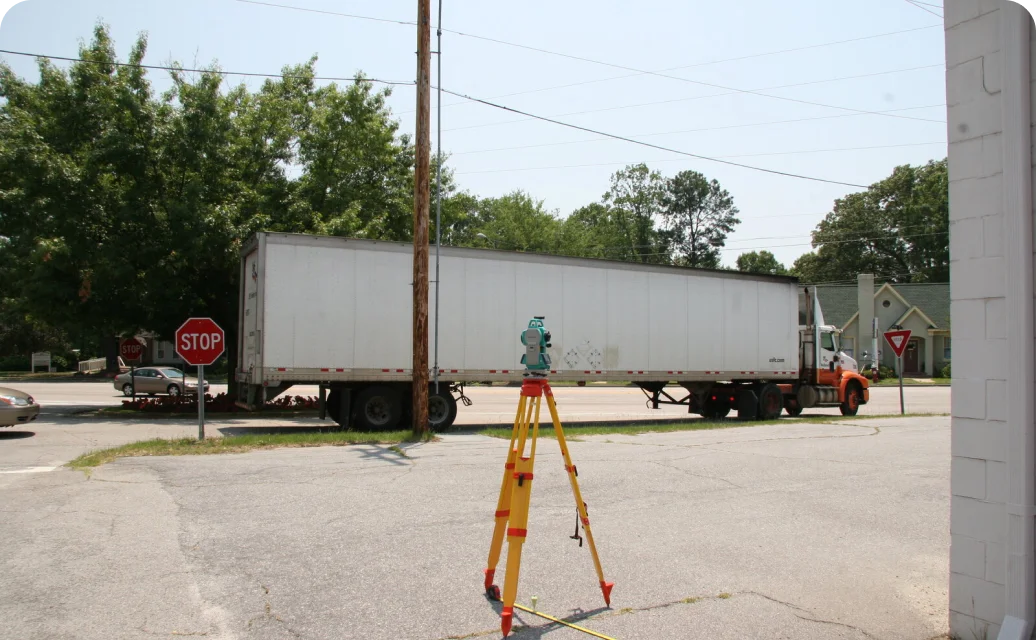
Gerald McDevitt documents commercial vehicle scenes using Emlid RS3 GNSS, Sokkia Total Station surveying, Autel EVO II Pro RTK V3 drone aerial photogrammetry for the large footprints typical of commercial collisions, Recon3D LiDAR scanning for detailed vehicle and trailer documentation, Bosch Crash Data Retrieval for passenger-vehicle event data, and Racelogic VBOX GPS data logger for speed and motion data when testing supports the analysis. Heavy-vehicle ECM extraction is performed by McDevitt and Associates and its qualified commercial vehicle specialists, including James Sloan, and the resulting data is integrated into the overall reconstruction analysis.
Federal Motor Carrier Safety Administration regulations are not merely administrative requirements. Violations can support negligence per se theories or broader causation narratives. Pre-trip inspection records, maintenance logs, driver qualification files, drug and alcohol testing documentation, and hours of service records all contribute to the picture of how the collision came to happen.
A reconstruction expert working commercial vehicle cases must connect regulatory evidence to physical causation rather than treating it as a parallel track. Documented maintenance violations may support a theory that a mechanical failure — out-of-adjustment brakes, worn tires, inoperative lights — contributed to the collision. Hours-of-service violations may support a fatigue theory anchored in the ELD record. Driver qualification deficiencies may support an argument that the carrier placed an unqualified operator behind the wheel. Each connection requires careful analysis to distinguish actual causal contribution from coincidental regulatory failure.
The preservation window for commercial vehicle evidence is often shorter than for passenger vehicle evidence. Trucks are released from the scene quickly. ECM data can be overwritten as the vehicle continues to operate. Telematics video is subject to automated retention limits that frequently run in days or weeks rather than months. ELD records have federal retention requirements but individual carrier data may be purged on routine schedules. Maintenance records, pre-trip inspection documentation, and driver logs are subject to carrier record-keeping practices.
A preservation letter should be issued immediately upon notice of a commercial vehicle collision. Key items to preserve include the vehicle in its post-collision condition (including brake adjustment as found), ECM data, telematics data from all platforms in use on the vehicle (with particular attention to video), ELD records, driver qualification files, pre-trip and post-trip inspection records, maintenance and repair records for the subject tractor and trailer, hours of service records, and dispatch and load documentation for the trip during which the collision occurred. Gerald McDevitt can assist retaining counsel with the specific categories of evidence to preserve and the technical requirements for proper preservation of digital records.
A commercial vehicle reconstruction can determine vehicle speeds, the sequence of pre-crash events, brake application and timing, mechanical condition of the vehicle as it relates to collision causation, whether the vehicle was operating within manufacturer and operational parameters, whether the driver had been operating within regulatory limits, and whether the documented conditions allowed a reasonably attentive commercial driver to perceive and respond to the hazard.
A reconstruction expert cannot determine the intent or conscious decision-making of the driver or any carrier personnel, nor what any individual subjectively perceived at any given moment. The expert provides the physical, mechanical, digital, and regulatory framework; the finder of fact applies that framework to the specific people in the case.
Commercial vehicle and fleet cases are among the most demanding in accident reconstruction. The unique dynamics of articulated heavy vehicles, the complexity of air brake systems and their adjustment-dependent performance, the richness of digital evidence across ECM, ELD, and third-party telematics platforms, and the interplay between physical causation and regulatory compliance together require analytical depth that goes well beyond standard traffic collision work. For plaintiff counsel building a case against a motor carrier, and for defense counsel protecting a carrier’s interests, a qualified reconstruction expert with commercial vehicle experience transforms disputed questions into documented answers — and provides the foundation for litigation that turns on what the physical, mechanical, and digital evidence actually shows.
1970 Armory Drive, Mount Pleasant, SC 29466
Gerald C. McDevitt
Low-speed impacts produce less vehicle damage but can still generate significant occupant forces — forensic reconstruction can distinguish…
 Gerald C. McDevitt
Proving that impairment caused a fatal collision — not just that the driver was impaired — requires a…
 Gerald C. McDevitt
A vehicle cannot leave a scene without leaving evidence — paint transfer, glass, tire impressions, and debris patterns…
 Gerald C. McDevitt
When a pedestrian or bicyclist is struck by a vehicle, the body's trajectory, throw distance, and impact kinematics…